Architecture as a mediator between land and sea
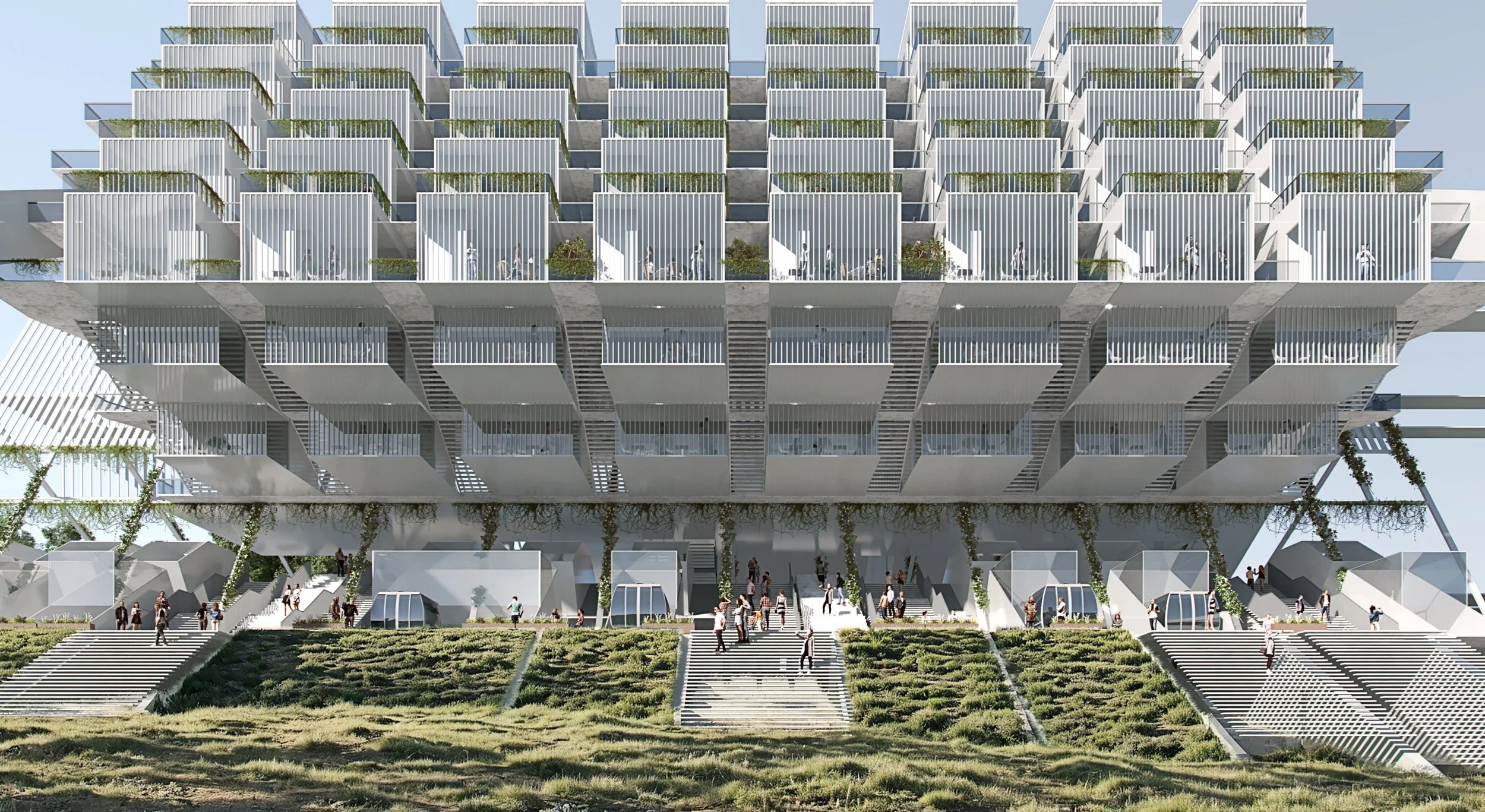
City on the Loop
City on the Loop is a speculative architectural proposal that reimagines Brooklyn’s Canarsie Pier as a phased, flood-adaptive urban edge. Developed since 2019, the project integrates elevated housing, mobility infrastructure, and ecological systems into a continuous loop that evolves with rising sea levels. Rather than resisting water, the design proposes a new coastal typology—one that transforms flood protection into a living, inhabitable edge for future cities.
Location: Canarsie, Brooklyn, NY
Team: Ruxuan Zheng, Haoyuan Wang
Sea Level Timeline
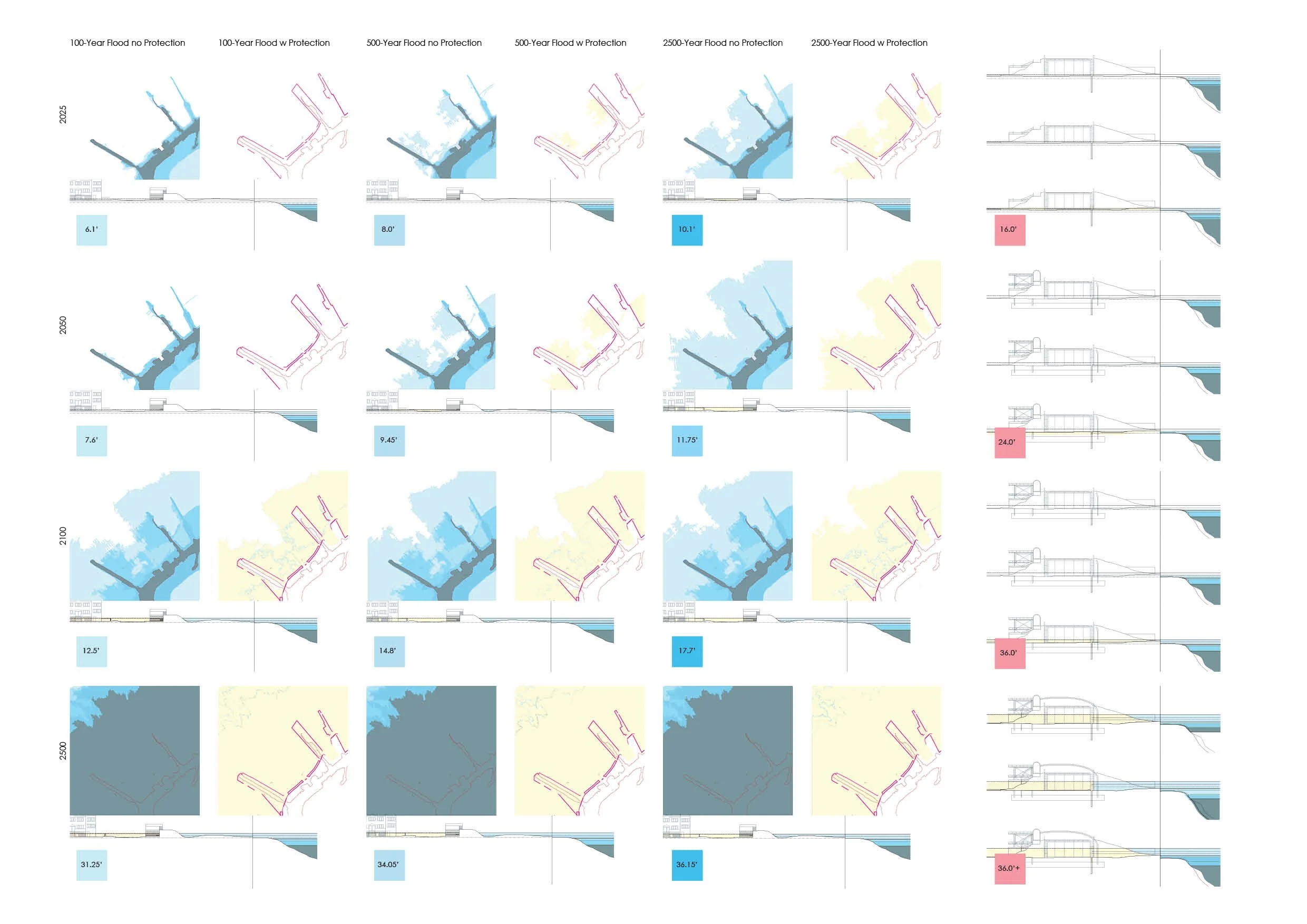
This diagram models projected flood levels across five recurrence intervals—from 100-year to 2500-year events—spanning four time periods between 2025 and 2100. The timeline reveals how sea-level rise dramatically expands flood zones over time, underscoring the urgency for adaptable coastal infrastructure. Each scenario informs phased design strategies for protection, housing elevation, and urban continuity.
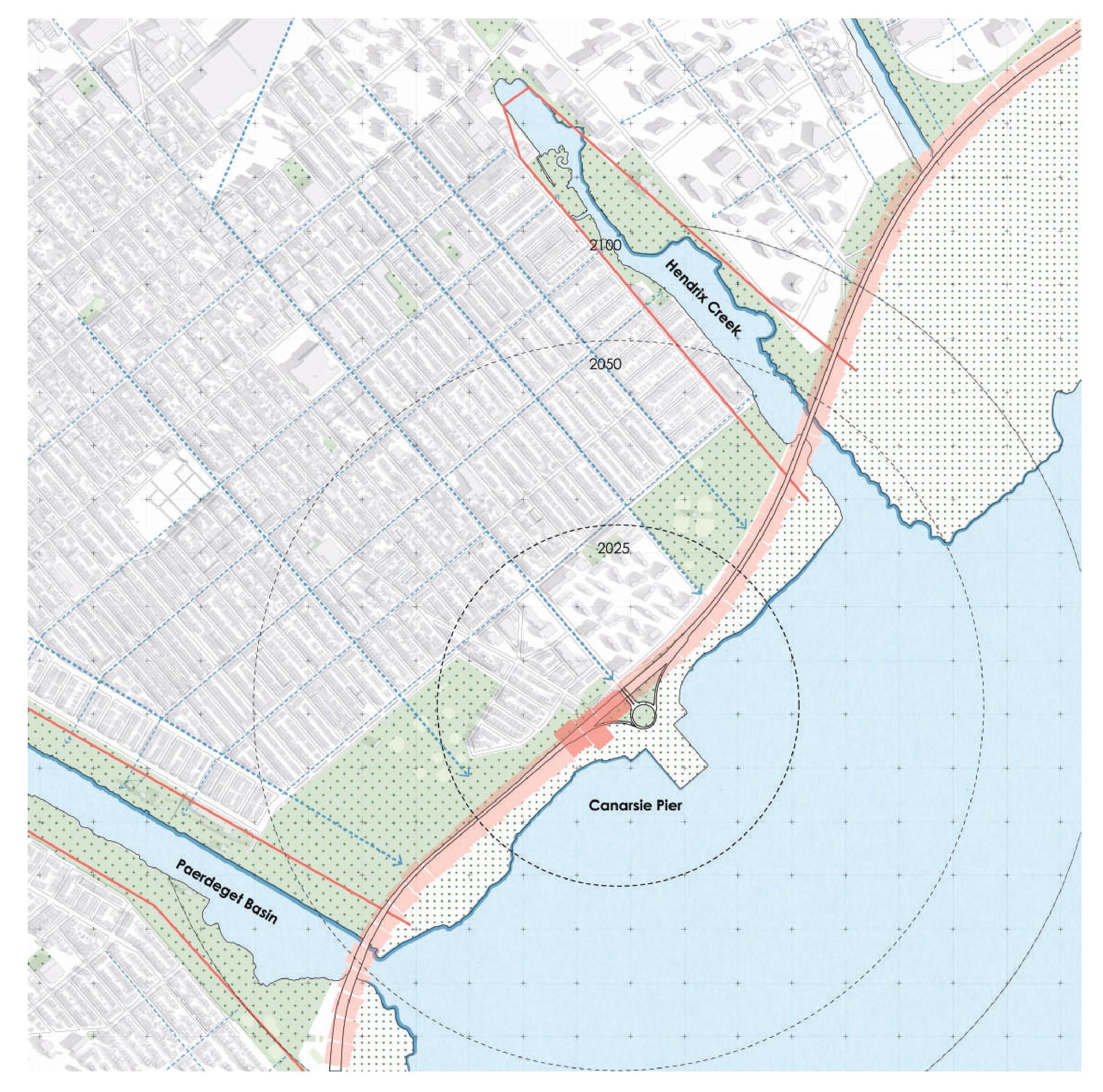
In response to these flood projections, the design adopts a phased, site-specific approach to protect vulnerable zones while preserving neighborhood connectivity. A berm is proposed along key inlets, reinforced with vegetation as a secondary defense. Housing near flood-prone areas will be protected with water control systems calibrated to projected flood levels.
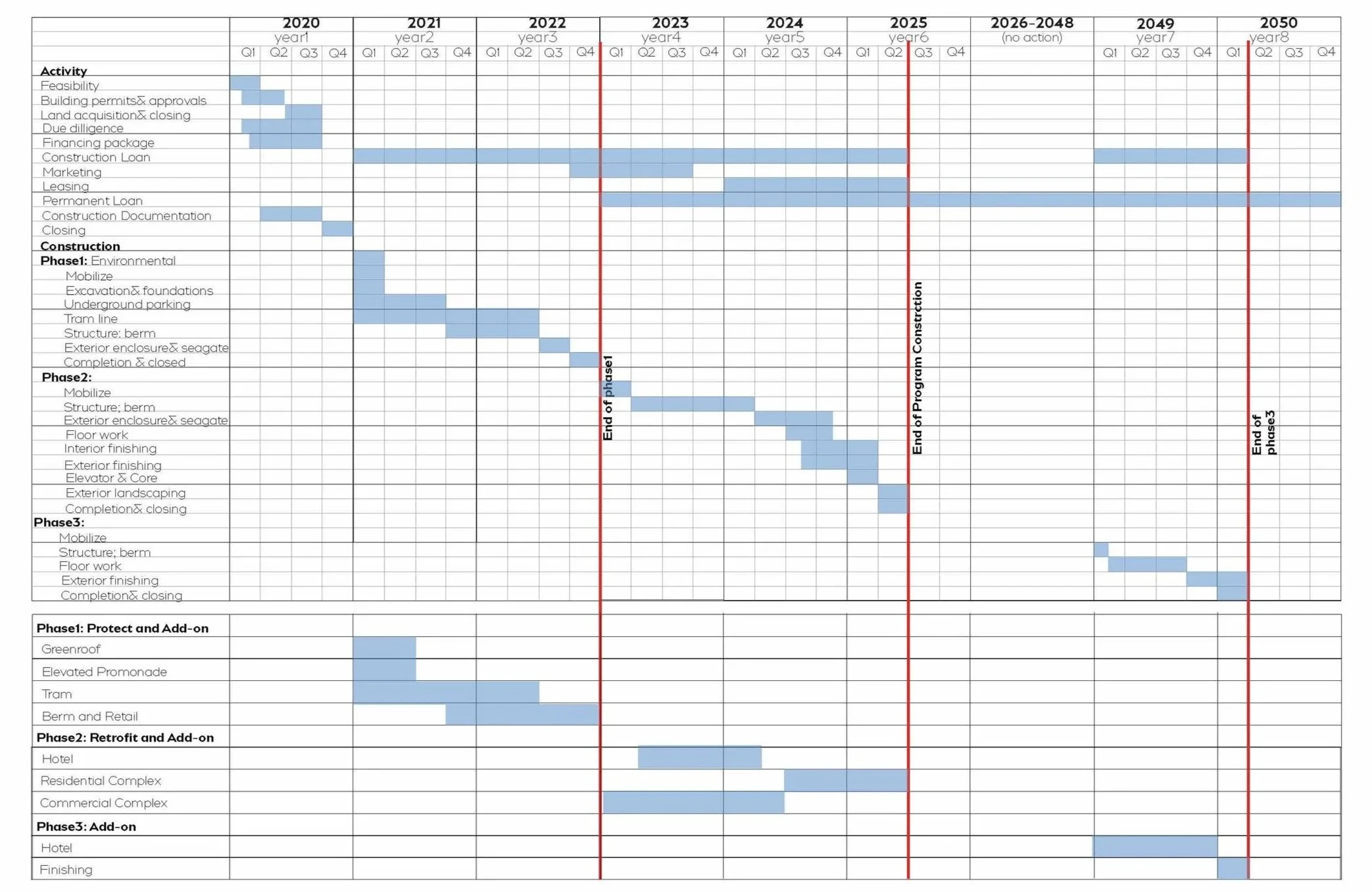
Construction Timeline
The Loop Timeline
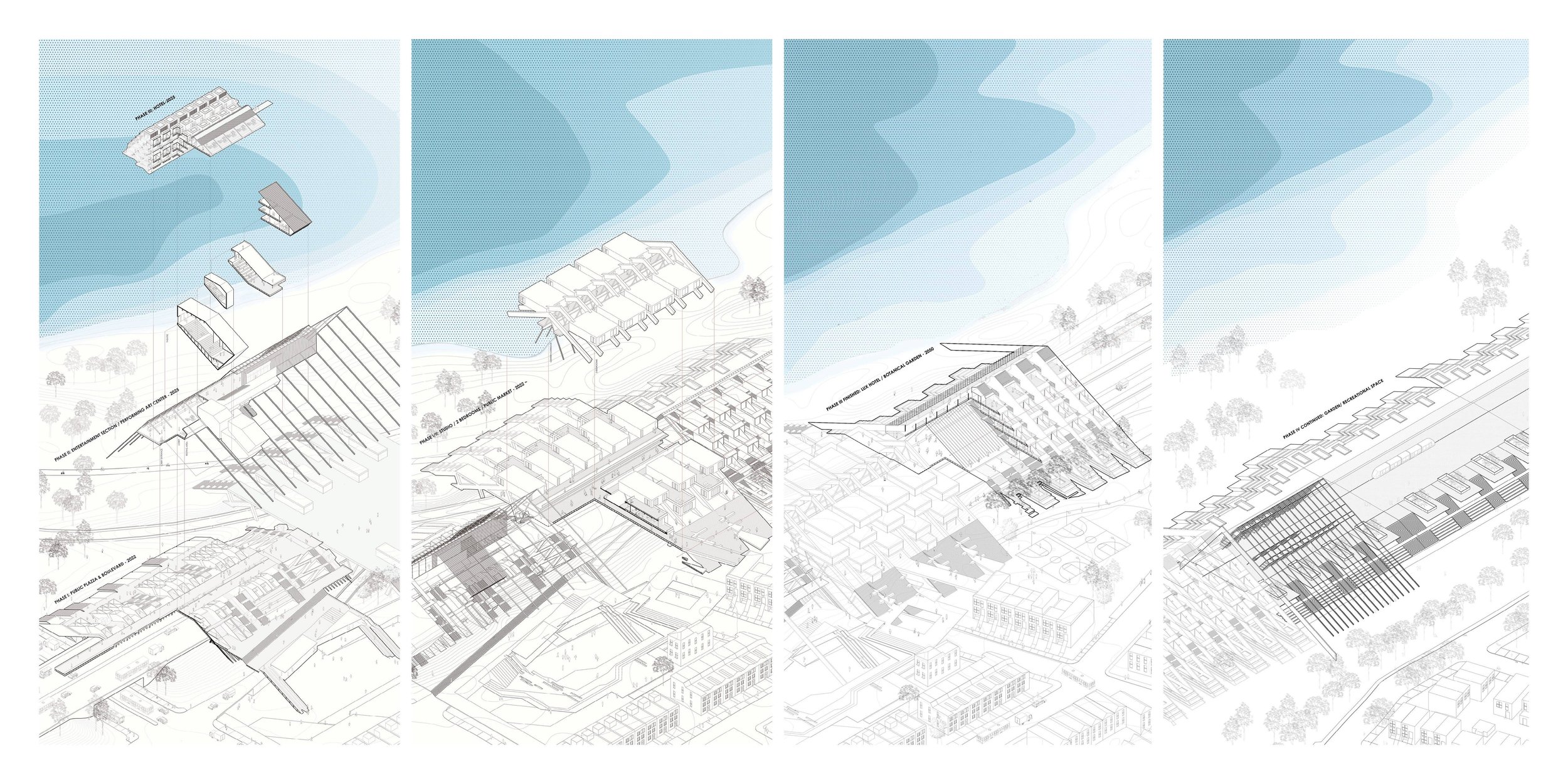
Phases
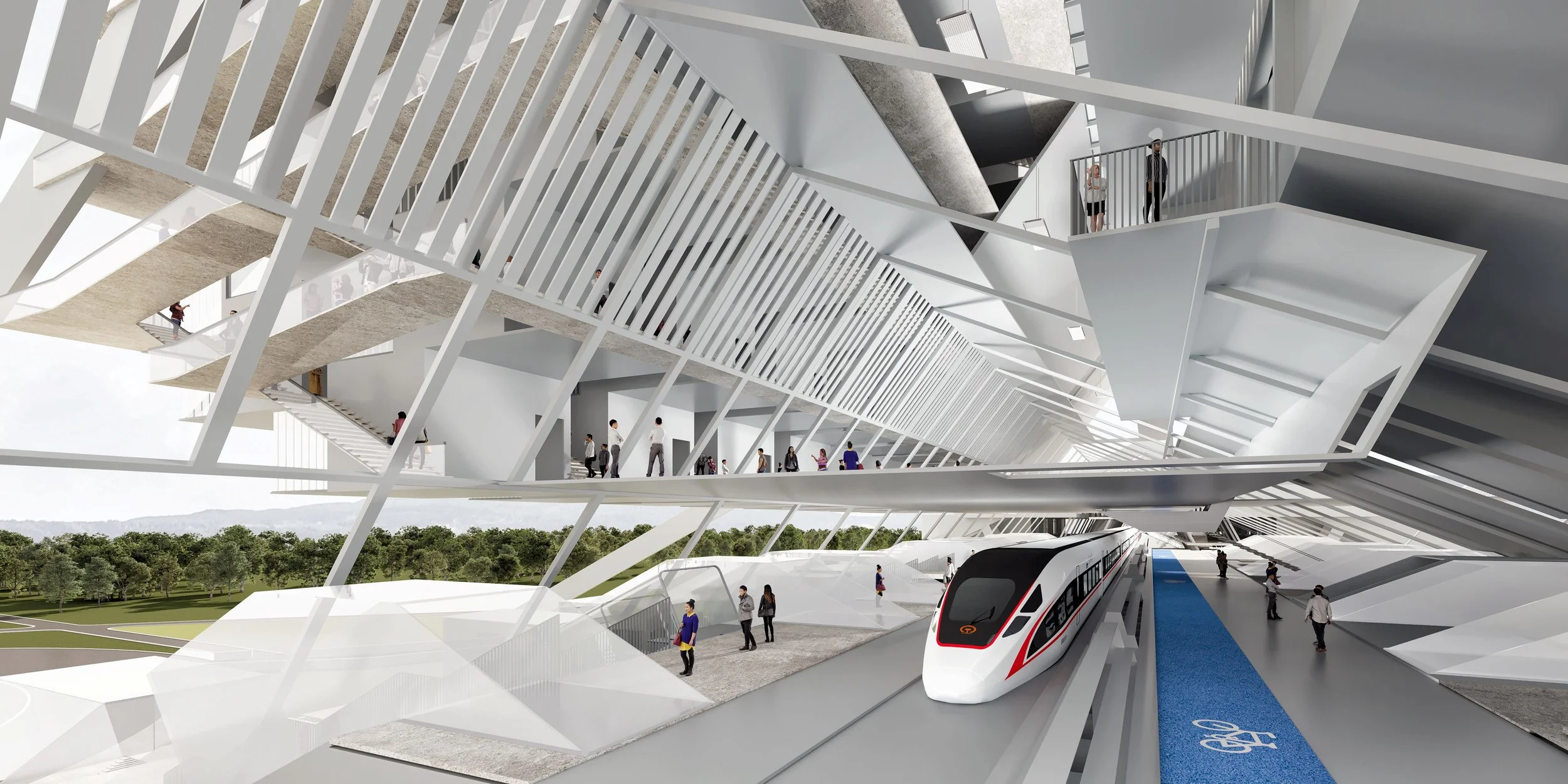
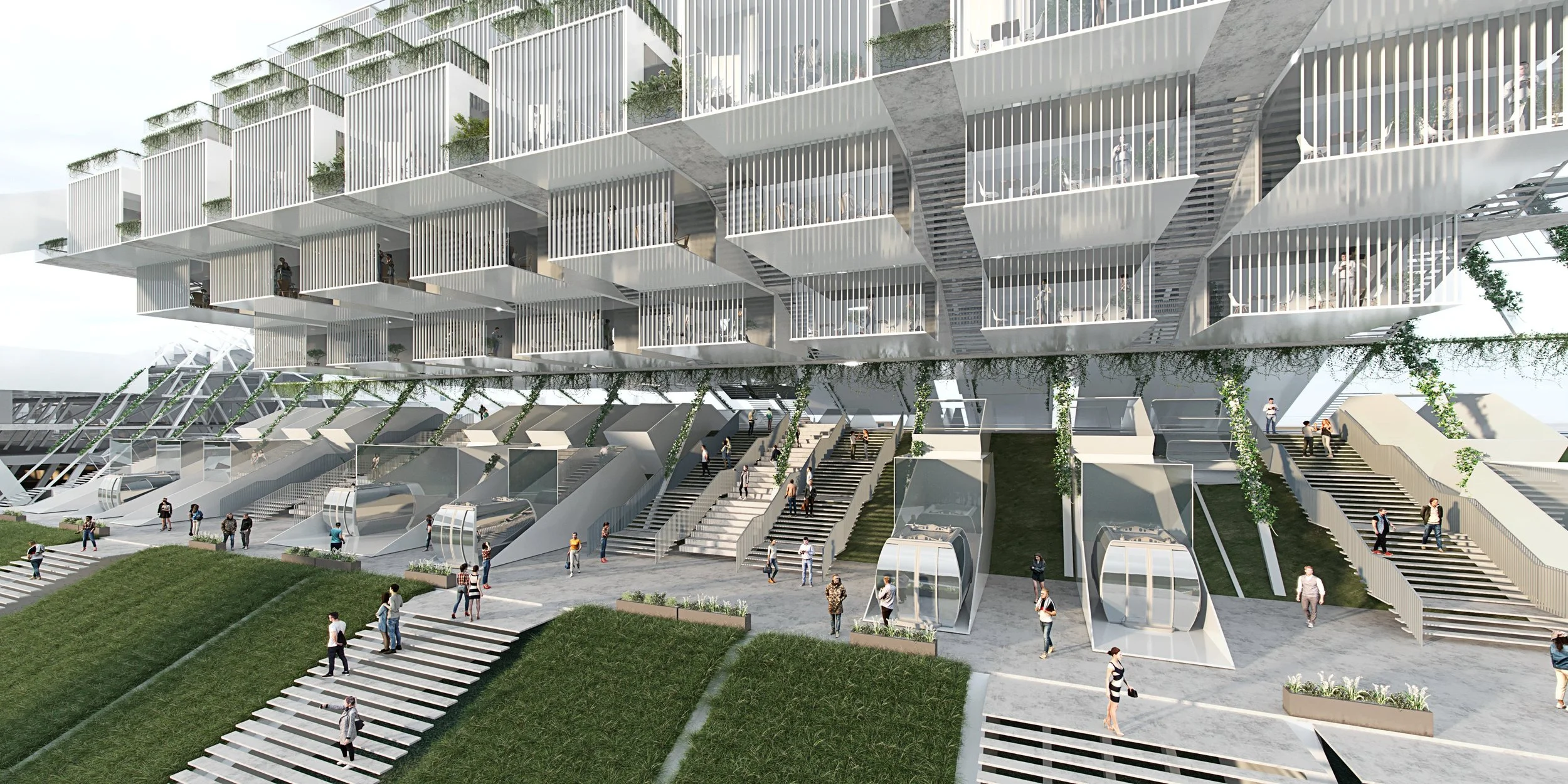
As a new layer built over the existing Belt Parkway, this phase reclaims the highway edge as an infrastructural foundation and public platform. By transforming the barrier into a connective spine, it breaks the long-standing separation between the waterfront and surrounding neighborhoods—introducing light rail and housing to restore urban-coastal continuity.
Phase I: Initiate the Loop
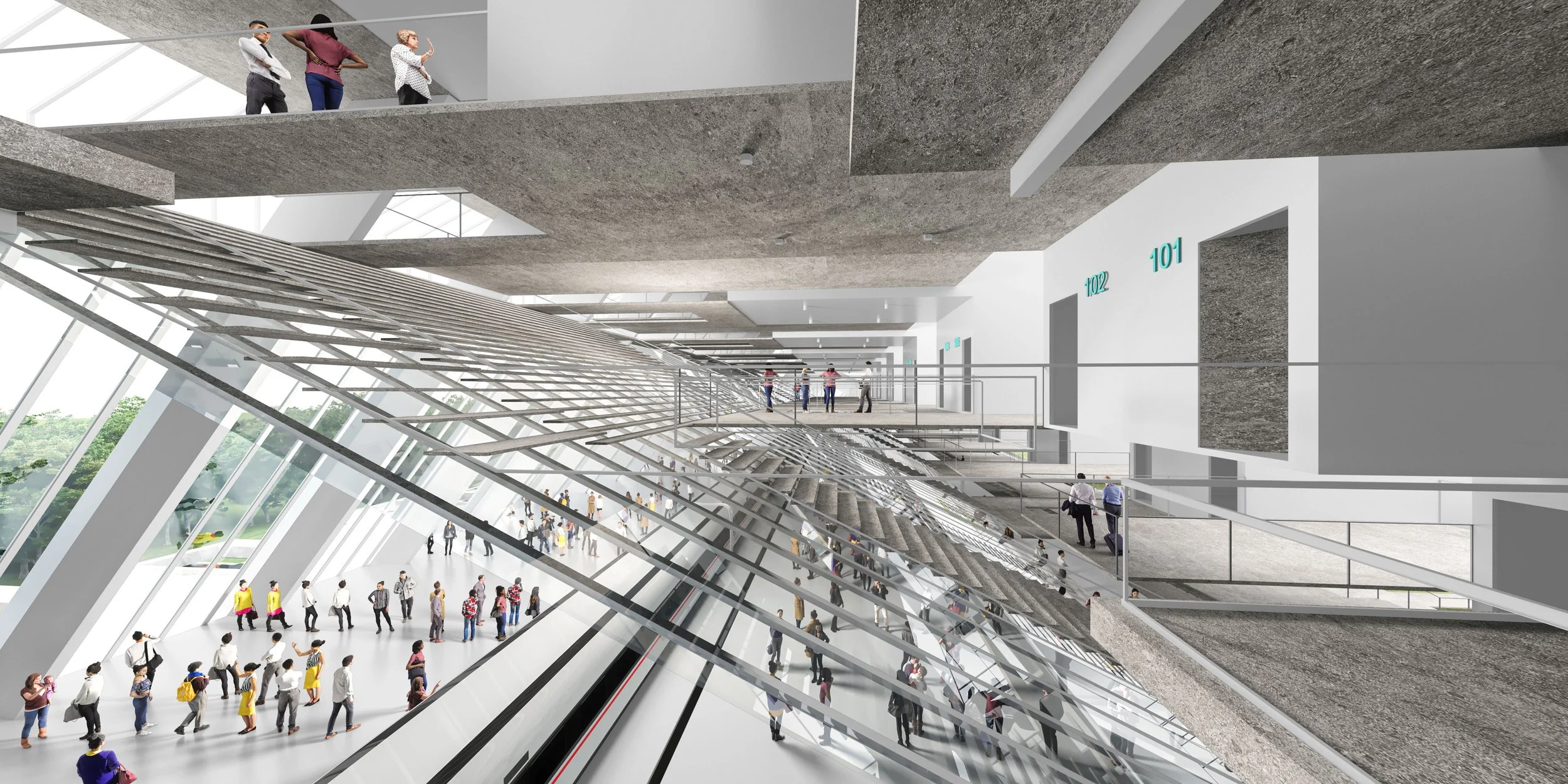
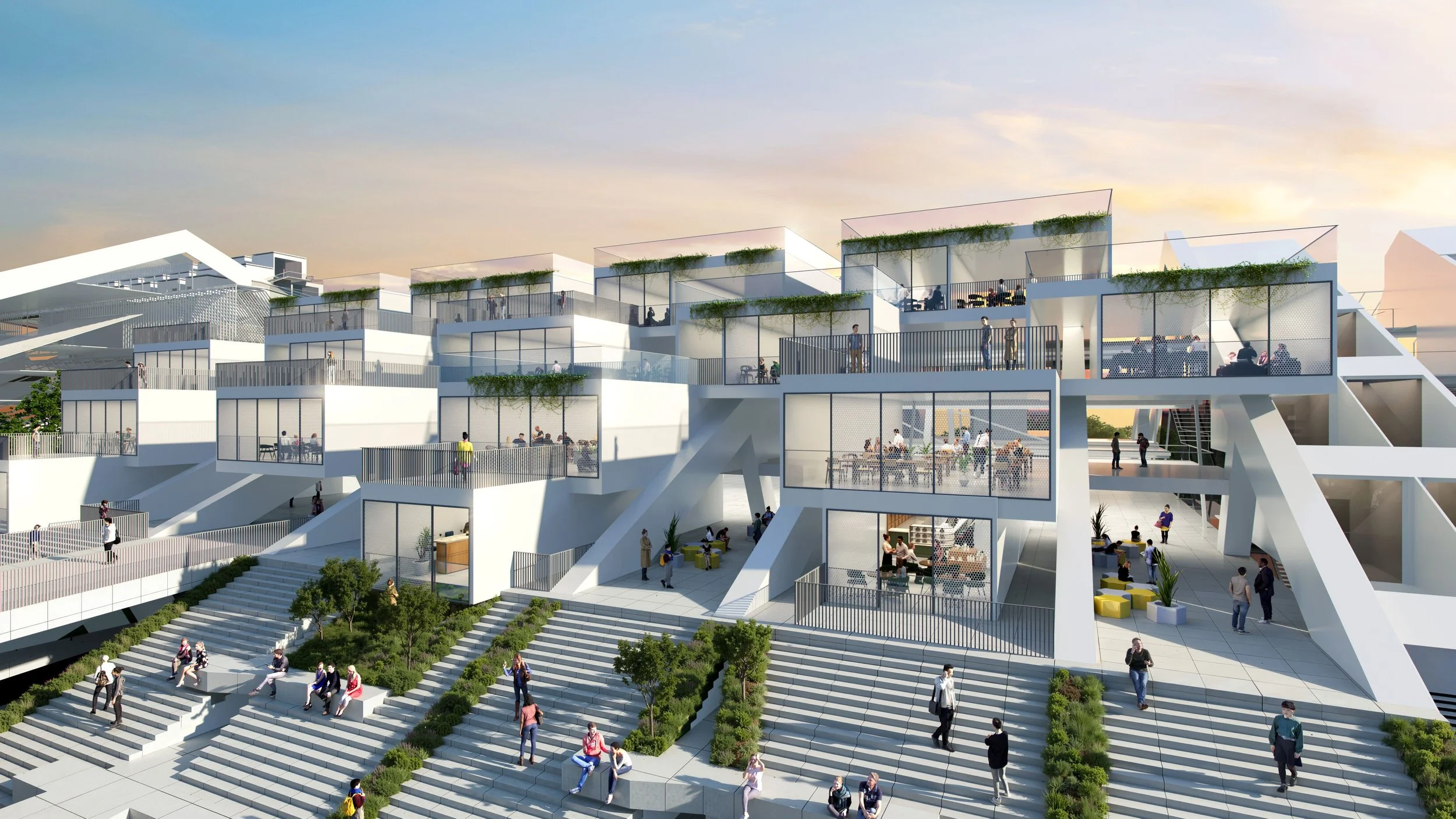
This phase layers ecological buffers, public spaces, and additional housing into the loop. It turns the shoreline into a dynamic zone of community, mobility, and environmental interface.
Phase II: Activate the Edge
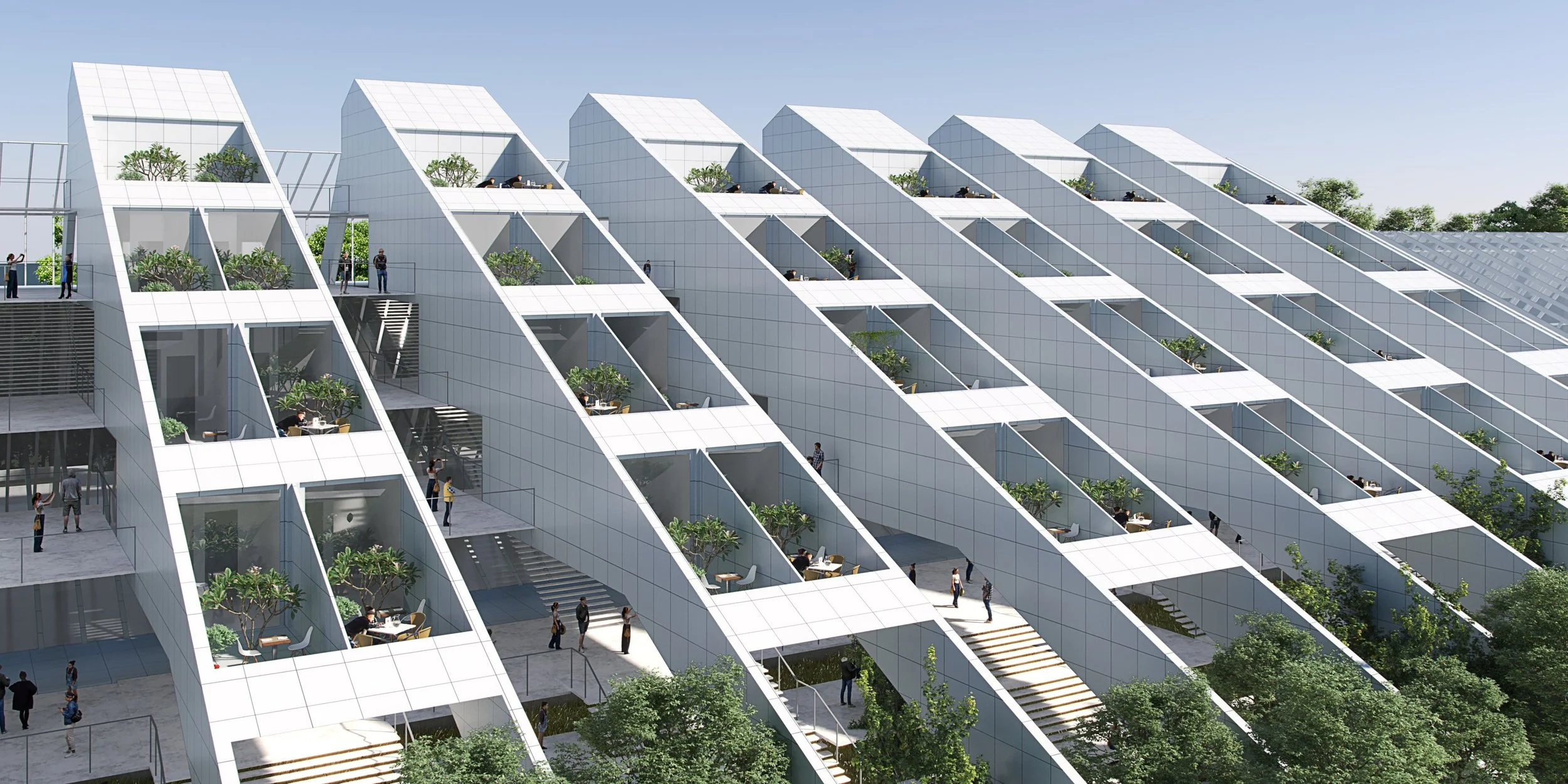
Responding to the growing demand for housing and economic activity, this phase introduces a hotel and mid-rise rental units. Rather than isolating development, it embeds them within the flood-adaptive loop—demonstrating a new, climate-responsive approach to urban density along the coast.
Phase III: Inhabit the Edge
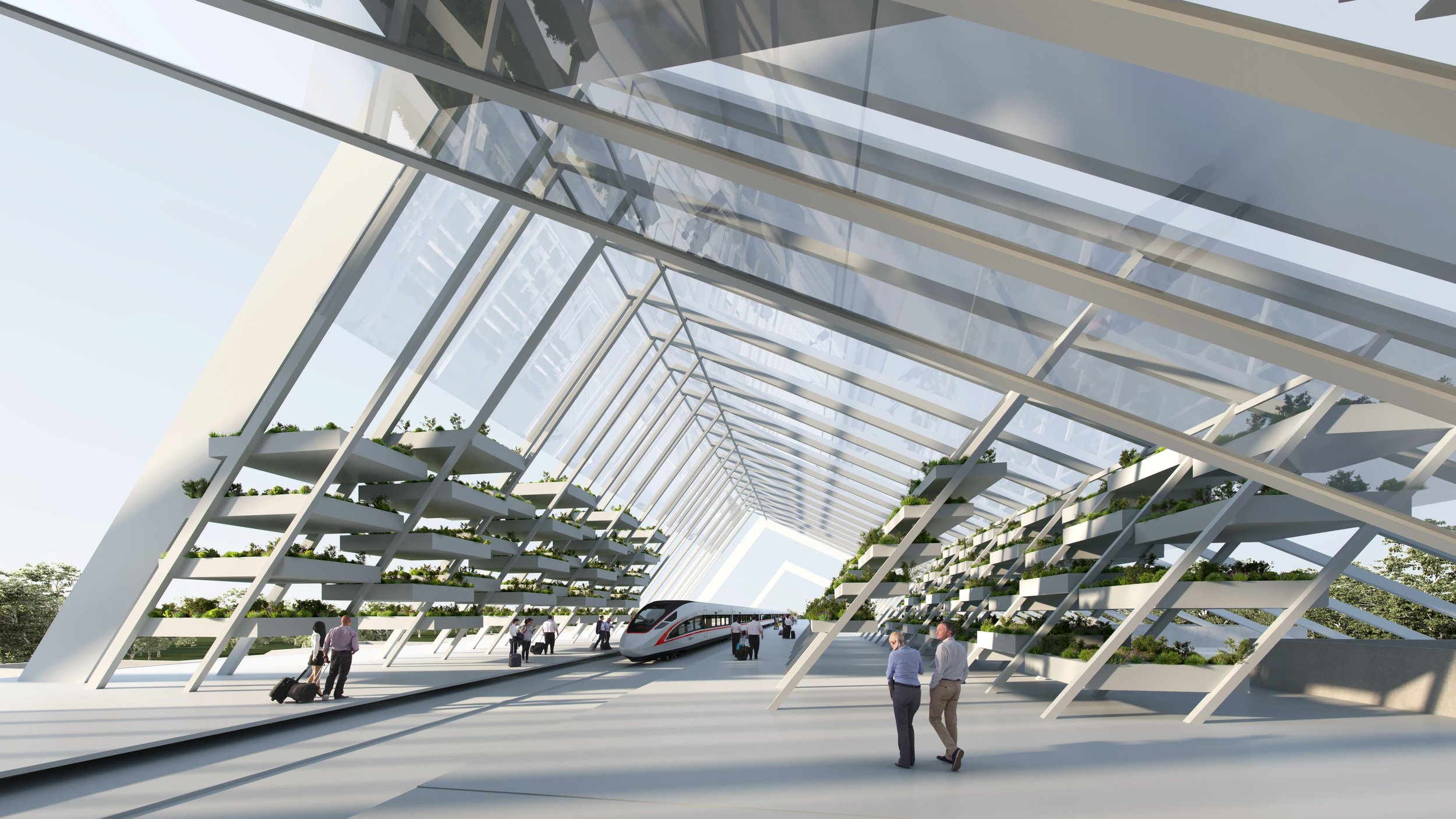
Future phasesenvisions the loop as a continuous, living system—growing incrementally based on local needs and environmental shifts. It extends beyond static planning, offering a framework where architecture, nature, and human life remain interconnected and adaptive over time.
Phase IV: Evolve with the Coast
Awards and Press
-
Architecture Masterprize 2025
Winner in ARCHITECTURAL DESIGN - Conceptual Architecture
-
Design Skill Awards 2025
Gold Winner in Best Urban Design & Master Planning
-
IDA Design Awards 2025
Honorable Mention in ARCHITECTURAL DESIGN - Conceptual Architecture
-
Global Design & Architecture Design Awards 2025
Second Award in Urban Design (Concept)